.svg)
.svg)


.jpg)
Splitting your help desk between an in-house contact and an outsourced provider often creates more confusion and delays than outsourcing everything. The hybrid approach can undermine the very user experience it aims to protect.
Picture a help desk ticket that stalls for two full days because the internal contact who's supposed to escalate it is out sick, and the outsourced team on the other end has no authority to move it forward.
This is the exact risk many businesses in Northern Virginia accept when they set up a hybrid IT helpdesk outsourcing model, keeping one in-house contact in place while handing the rest of support to an outside provider, hoping to keep control without losing the benefits of outsourcing.
Yet splitting responsibilities this way tends to breed more confusion than it prevents, since the line between who owns what blurs the moment a ticket gets even slightly complicated.
That blurred line is exactly why a clear escalation path matters so much for fast, reliable support: once users stop knowing who to contact or what happens next, response times drag and issues linger far longer than they should.

Divided responsibilities create confusion, not clarity
The logic behind keeping one in-house contact usually sounds reasonable enough: that person acts as a buffer, catching anything that might otherwise slip through the cracks between an internal team and an outsourced one.
In practice, though, this setup tends to manufacture a new problem in place of the old one. Users can't tell whether to reach the internal contact or the outsourced help desk support team, so when something needs escalating, it stalls between the two sides, each waiting on the other to make the first move.
That stalling is what actually slows resolution time down. Rather than a direct line to technical support, users hit extra steps and delays, and customer satisfaction drops even though the whole arrangement was built to protect it.
Why escalation paths matter more than familiarity
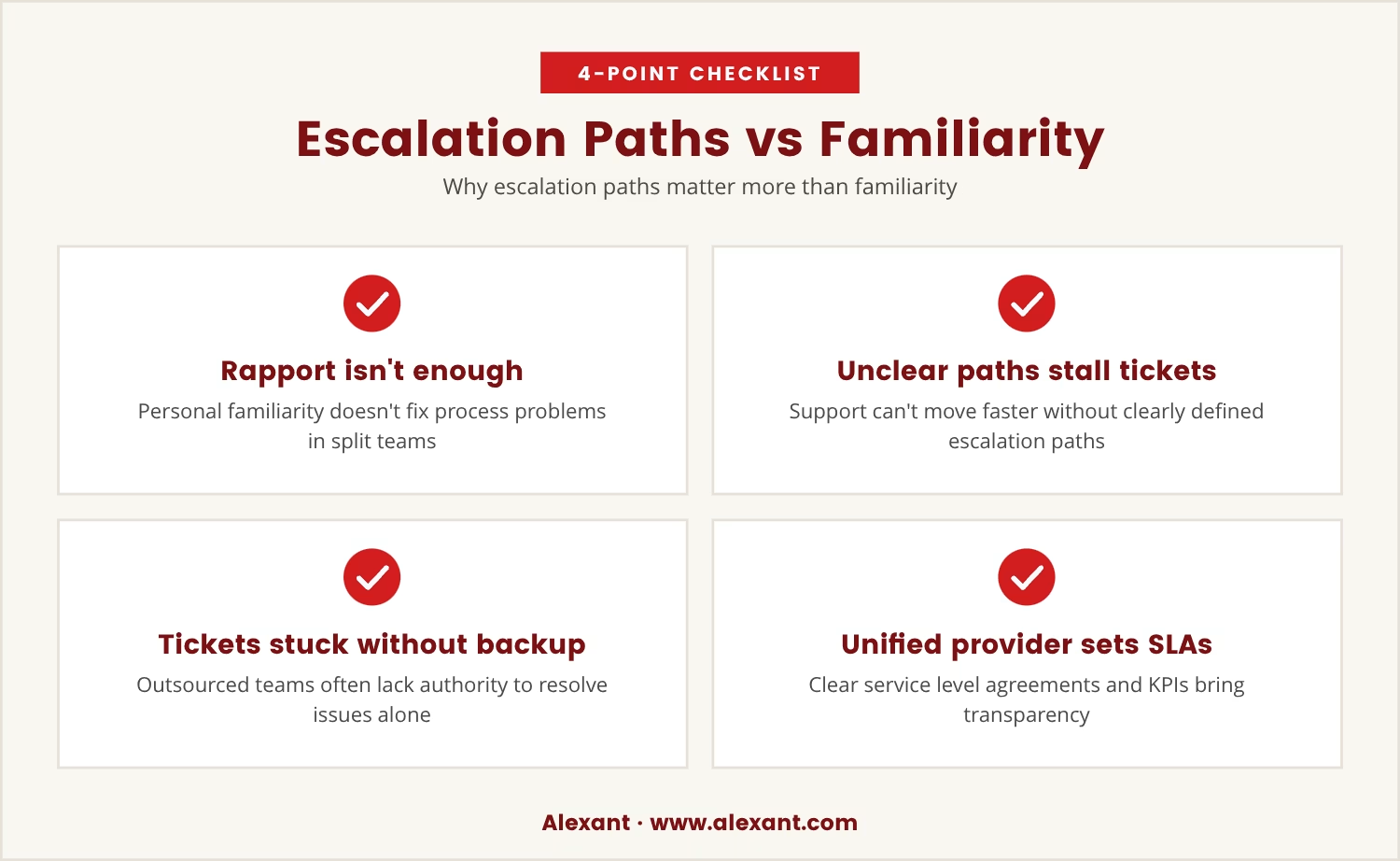
Behind the hybrid model sits an assumption that a familiar in-house face will put users at ease. Personal rapport helps, certainly, but it does nothing to fix the process problems baked into a split help desk team.
Because when escalation paths aren't clearly defined, not even the most capable internal contact can make support move faster. If that person is out of office or buried in other work, tickets sit untouched, and the outsourced team on the other side often lacks the authority or the information to step in and resolve things alone.
A single, unified help desk provider sidesteps that gap entirely by setting clear service level agreements and KPIs, so it's obvious from the start how and when issues get handled — a kind of transparency that usually does more for users than familiarity ever could.
IT helpdesk outsourcing in Northern Virginia: What actually happens when you split the front line?
Companies across Northern Virginia often lean toward this hybrid setup, expecting the best of both approaches. Splitting the front line between an in-house contact and an outsourced IT help desk services provider tends instead to surface problems nobody planned for.
- Unclear ownership: When an issue arises, users may not know who owns the problem, which leads to duplicate tickets or, worse, no action at all.
- Delayed escalation: If the in-house contact is the only one allowed to escalate issues, everything slows down the moment they're unavailable.
- Broken communication: Information gets lost passing between the internal contact and the outsourced team, leading to mistakes or missed details.
- Inconsistent service quality: The help desk provider may run different processes or standards than the in-house contact, leaving users with an uneven experience.
- User frustration: When users don't get clear answers or fast help, their trust in the support process erodes.
A fully outsourced help desk team sidesteps every one of these pitfalls by giving all users a single, consistent point of contact.
The hidden costs of hybrid help desk operations
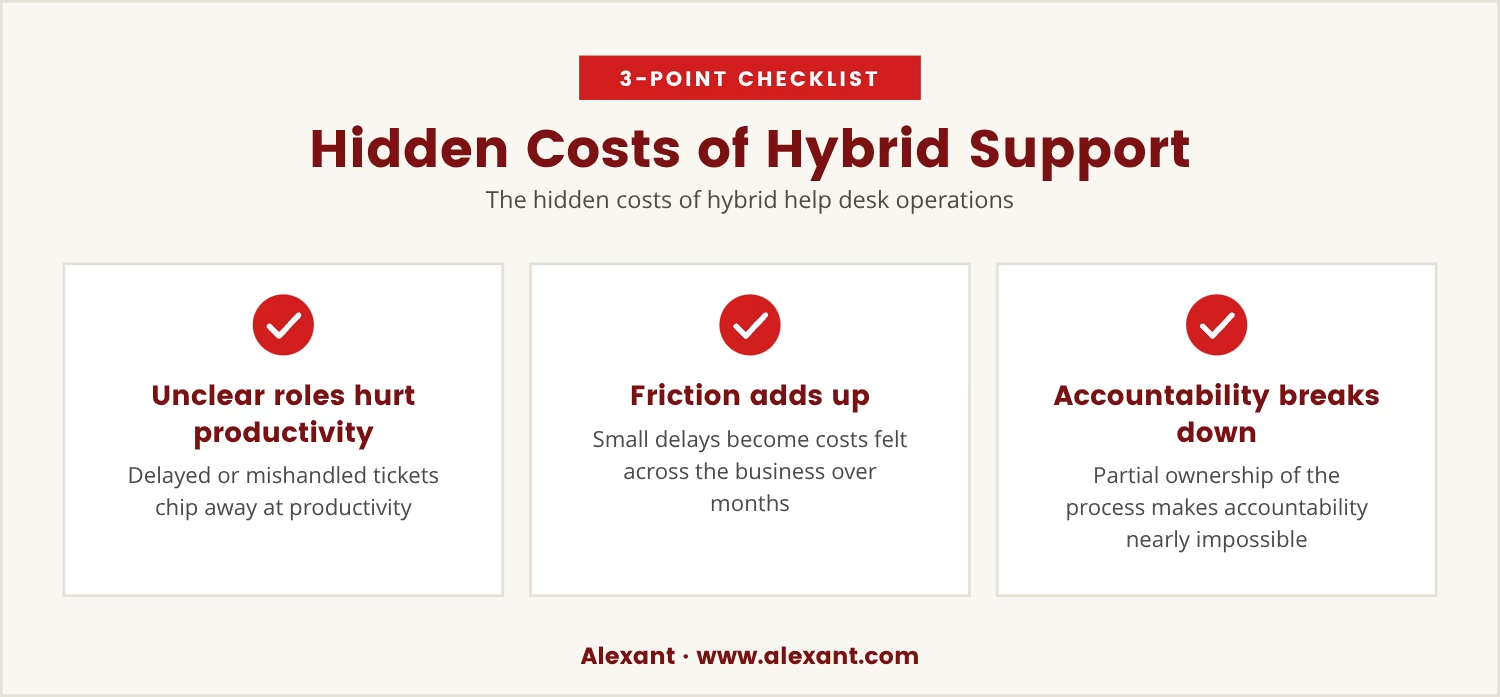
On the surface, a hybrid approach looks like a way to manage support costs while keeping a hand on oversight. Underneath, though, the hidden costs accumulate faster than they first appear.
Every ticket delayed or mishandled because roles were never made clear chips away at productivity. Users wait longer for help, IT staff burn time sorting out who should be doing what, and over months these small frictions add up to costs that are hard to measure on a spreadsheet but easy to feel across the business.
There's also the matter of missed KPIs: when a service desk outsourcing partner only owns part of the process, holding anyone accountable for the full customer experience becomes close to impossible, which is how finger-pointing and unresolved issues take root.
How a unified help desk provider improves customer experience
Against that backdrop, a single outsourced team offers a clear alternative to the split model. Here's how a unified approach changes the picture:
Clear escalation process
With one provider, the escalation path stays simple. Users know exactly who to contact, and issues move quickly to the right level of support.
Consistent response times
A unified team can monitor and manage response times across every ticket, which makes hitting service level agreements far more achievable.
Better communication
When everyone works from the same information, it flows smoothly between people, cutting the risk of lost details or miscommunication.
Streamlined support services
A single help desk team handles everything from password resets to complex technical support, so users no longer bounce between contacts.
Improved accountability
With one provider responsible for the entire process, tracking performance and making improvements becomes far more straightforward.
Scalable solutions
A unified help desk adapts as the business grows, adding or adjusting services without the friction of coordinating across multiple teams.
What to consider before choosing a hybrid or fully outsourced model
Deciding between these two models starts with a plainer question: what matters most for the people who actually rely on the help desk? Are you confident that your current escalation paths are clear and effective? If not, a hybrid setup risks making things worse rather than better.
Look honestly at your current help desk team and ask whether splitting responsibilities has ever caused delays or confusion. If users have waited longer for support or received mixed messages, that's usually the signal to rethink the approach.
A fully outsourced help desk provider can offer virtual IT help desk support available across time zones and business hours, which makes consistent service quality far easier to deliver — a real advantage for companies that want reliable systems without juggling multiple points of contact.
Bulletproofing your help desk: Key steps for a smooth transition
Moving from a hybrid setup to a fully outsourced model can feel like a big step, but a handful of practical actions make the shift far smoother:
- Map your current escalation paths: Identify where confusion or delays happen now.
- Set clear expectations: Work with your new provider to define service level agreements and response times.
- Communicate with users: Let everyone know how the new process works and who to contact for help.
- Monitor KPIs: Track key metrics to make sure the new setup is delivering the customer satisfaction you expect.
- Review regularly: Schedule check-ins with your provider to address any issues and make improvements.
A thoughtful transition plan is what ultimately keeps you clear of the pitfalls that divided responsibilities create.
The bottom line: Why a single provider delivers better results
Splitting a help desk between an in-house contact and an outsourced team tends to generate more problems than it resolves. Confused escalation paths, slower resolution times, and inconsistent service quality all chip away at the experience users actually get.
A fully outsourced help desk provider replaces that uncertainty with a clear, accountable, and efficient way to support the business. For companies in Northern Virginia and beyond, that shift tends to produce better outcomes for everyone involved.

Why clarity matters more than a familiar face
If your business has 1 to 80 users—especially in the 15 to 70 user range—you might be weighing the risks of splitting help desk responsibilities. At Alexant, we understand how easy it is for confusion to creep in when escalation paths aren’t clear.
We invite you to see how our approach to unified help desk support can help you avoid these common pitfalls. Let’s talk about what would work best for your team.
Worried about making the switch?
Try our help desk support with a 90-day risk-free trial—no upfront or implementation fees, and a full refund if you’re not satisfied.
Frequently asked questions
How can I make sure my outsourced help desk team understands our business needs?
Share detailed documentation about your systems, workflows, and common issues, then keep regular meetings and open communication going so the team stays aligned with your goals. The more context provided, the better support can be tailored to your specific needs.
What happens if my users need support outside normal business hours?
Most managed service providers offer 24/7 support or extended business hours, so discuss specific requirements upfront to make sure availability matches your users' schedules. This matters especially for teams with remote or international staff.
Will outsourcing IT help desk support reduce response times?
A well-structured outsourced team can often respond faster than a split model, since there's no confusion over who handles each request. Clear processes and dedicated resources keep response times consistent and predictable.
How do I measure the quality of my outsourced help desk services?
Track key performance indicators such as resolution time, customer satisfaction scores, and ticket volume, then review these metrics regularly with the provider. That ongoing review is what confirms expectations are being met and shows where improvements are still needed.
Can an outsourced team handle technical support for specialized software?
Many providers bring experience across a wide range of software, covering both common and specialized tools. Ask about their expertise in your specific applications during the selection process to confirm the fit.